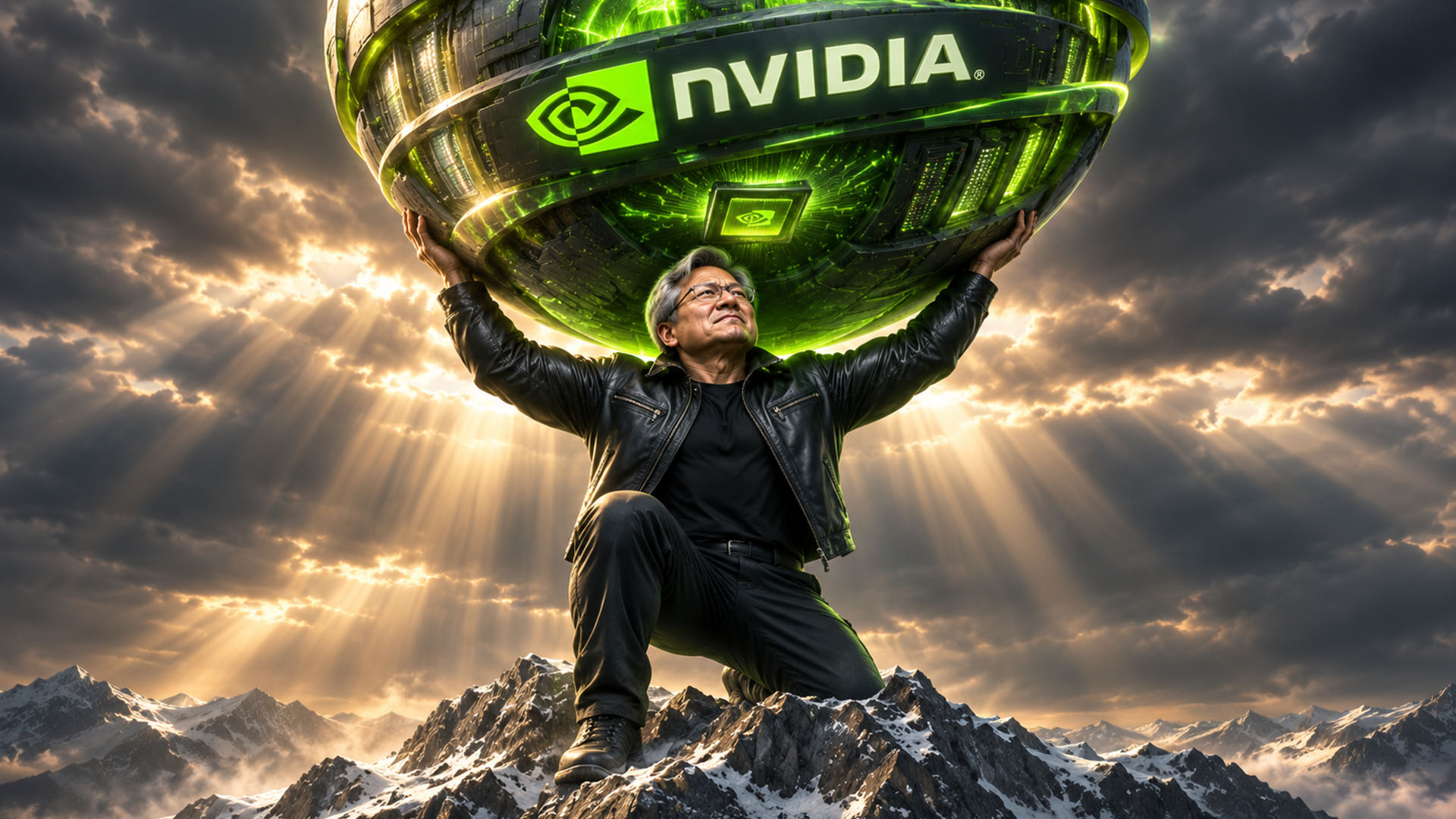
With all the buzz surrounding one of the world’s most valuable companies and its visionary leader, I can’t help but think, from a corporate branding perspective, would the outcome be different if Nvidia didn’t just bank on 1 key person? I mean, from when it started until the time of writing, Nvidia’s stock fell ~24% or lost about USD 1.2 trillion. That’s 12 zeros!
Anyway, this piece is not going to be giving you stock market or moral advice.
It’s more about what Nvidia’s leadership crisis reveals about personal branding, key person risk and building a business that people can trust beyond its founder.
For years, Jensen Huang was one of Nvidia’s greatest brand assets.
The iconic leather jacket.
The charismatic keynote presentations.
The visionary conversations about artificial intelligence.
You didn’t have to understand GPUs or semiconductor technology to recognise Jensen Huang.
He made a highly technical organisation feel human, approachable and exciting.
In many ways, Jensen Huang wasn’t just the face of Nvidia.
He was Nvidia.
And that is precisely where the risk lies.
Following revelations surrounding Huang’s personal relationships and an investigation into possible foreign-intelligence involvement, Nvidia announced his resignation as CEO on 12 November 2026. The suspected intelligence connection remains an allegation, but the reputational consequences have been very real.
A company built on technological innovation, world-class engineering and decades of achievement suddenly found its reputation being judged through the actions of one individual.
This raises an uncomfortable question for business owners.
What happens when the person who gives your brand its credibility becomes the reason people question it?
The Power and Danger of Personal Branding
We often encourage business leaders to build their personal brands, and for good reason.
People connect with people, not corporate entities.
A founder sharing their vision is often more compelling than a corporate mission statement.
An engineer explaining a breakthrough can be more convincing than a product brochure.
A leader discussing industry challenges can build more credibility than a company announcing how innovative it is.
This is particularly relevant in B2B businesses, where purchasing decisions often involve substantial investments, long-term relationships and a high degree of trust.
Personal branding gives an organisation a human face.
It helps customers understand the thinking, expertise and values behind the business.
But there is a difference between using a leader’s personal brand to strengthen an organisation and allowing the organisation’s entire identity to revolve around that leader.
The first builds credibility.
The second creates dependency.
And dependency creates vulnerability.
When Key Person Risk Becomes Brand Risk
In business, key person risk traditionally refers to an organisation’s dependence on individuals whose departure could disrupt operations, relationships or strategic direction.
But there’s another dimension that businesses often overlook.
Reputational key person risk.
When customers associate a company’s expertise, credibility and values almost entirely with one person, their perception of the organisation becomes inseparable from their perception of that individual.
A founder’s success becomes the company’s success.
A founder’s credibility becomes the company’s credibility.
Unfortunately, a founder’s mistakes can also become the company’s mistakes, at least in the eyes of the public. Ooops!
Nvidia’s saga can be a good wake-up call for companies out there.
Sure, the company still possesses extraordinary technology, talented engineers, intellectual property and an established ecosystem. Those strengths don’t disappear because one individual leaves.
Yet the leadership crisis has raised questions about continuity, trust and the organisation’s future.
The problem isn’t necessarily that Nvidia lacks other capable leaders.
It’s that, for many outside the organisation, few have been as visible or recognisable as Jensen Huang.
This is where corporate branding becomes more than identity design and communication.
It’s about ensuring that people recognise the value of the organisation itself, not just the individual representing it.
One Brand. Multiple Human Faces.
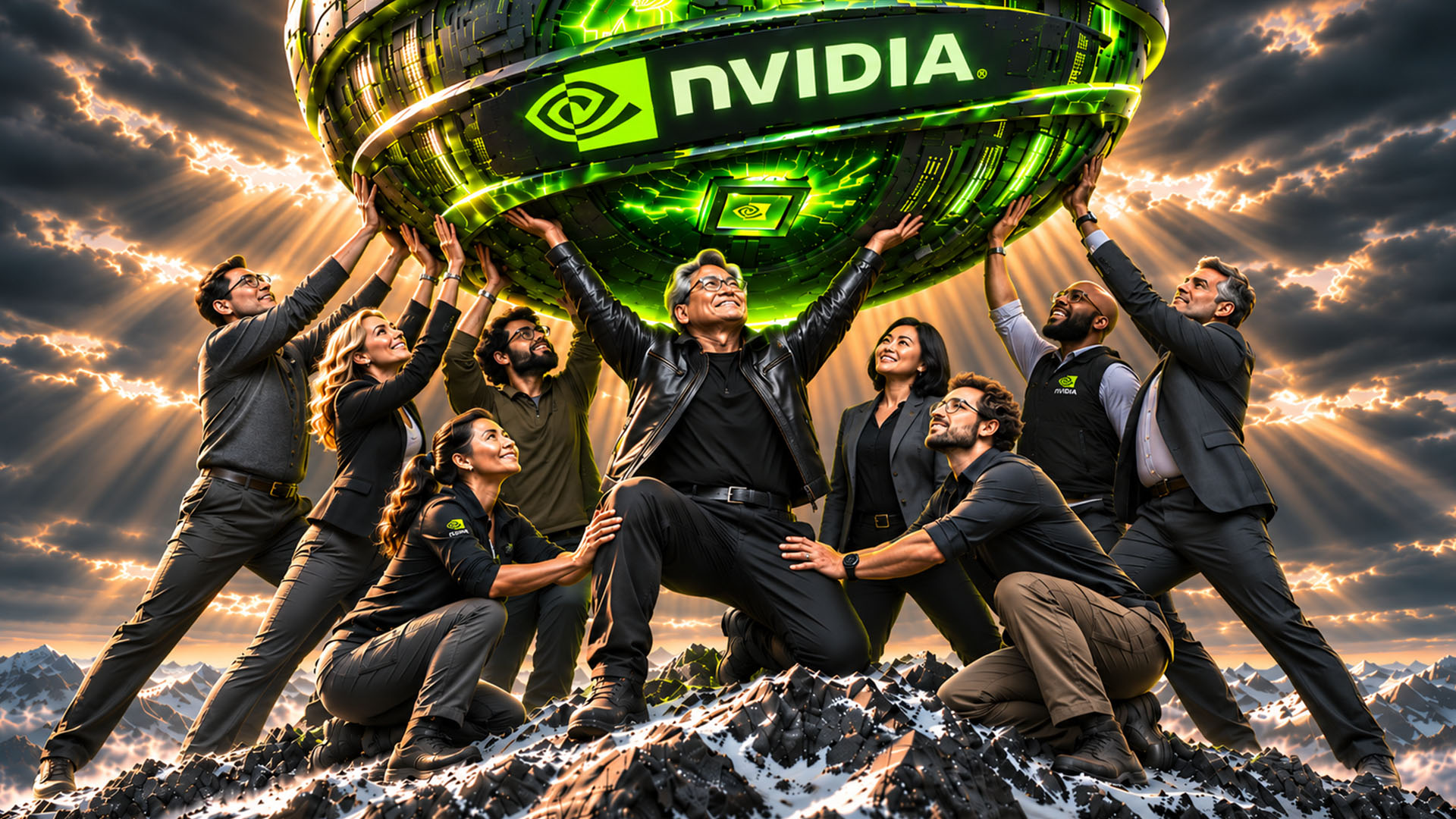
Does this mean businesses should stop building their founders’ personal brands?
Nope!
The solution isn’t to make the organisation faceless again.
It’s to make more of the people behind the organisation visible.
Perhaps add it to your key executive’s role & responsibilities when you’re hiring 😈.
The founder continues to communicate the company’s vision and direction.
Your technical director shares industry knowledge and explains engineering solutions.
Your project managers discuss how complex challenges are solved.
Your people and culture leaders share the values that shape the workplace.
Suddenly, customers begin to see something beyond the founder.
They see an organisation filled with knowledgeable, capable and committed people.
Different individuals contribute different perspectives, but all reinforce the same brand promise.
Instead of you carrying your brand’s credibility, the company builds credibility through its collective expertise.
And that creates a more resilient brand.
Brand Consistency Doesn’t Require a Single Spokesperson
Of course, giving more people visibility doesn’t mean allowing everyone to communicate independently without direction.
In fact, this is precisely why a strong corporate brand strategy matters.
Without a clearly defined brand positioning, values and messaging framework, multiple voices can easily create confusion.
But when everyone understands what the organisation stands for, each person can express those values through their own expertise and personality.
Everyone has a role to play.
You as the founder, communicate ambition 🎯.
Your technical team demonstrates competence 💪.
Your operations team reinforces reliability 👍.
Your people behind customer relationships demonstrate care and accountability ❤️.
Together, these perspectives create a richer, more believable picture of your organisation.
Customers don’t just hear what the company claims to be. They see those claims reflected in the people who work there.
That’s what makes a corporate brand feel genuinely human.
Building Brand Resilience Before You Need It
For many Malaysian SMEs, especially founder-led businesses, this is worth thinking about.
It’s common for the founder or managing director to be the face of the organisation, its chief salesperson, most recognisable expert and primary relationship holder.
That visibility can be a tremendous advantage when building a business.
But as the organisation grows, its reputation needs to grow beyond the founder.
This doesn’t require making every employee a thought leader or turning the leadership team into social media personalities.
It can begin with something as simple as introducing subject-matter experts on the company website, featuring project teams in case studies, encouraging department heads to share professional insights or giving customers a clearer view of the people responsible for delivering the work.
These efforts may seem small individually.
Collectively, they strengthen the perception that the organisation’s capabilities are embedded in its people, systems and culture, rather than concentrated in one personality.
Of course, wider visibility alone cannot protect a company from poor governance or leadership misconduct. Brand resilience must be supported by genuine organisational strength, accountability and succession planning.
But strategic communication can help ensure that those strengths are visible and understood long before a crisis occurs.
Your Brand Should Be Bigger Than Any One Person
Jensen Huang’s story is a reminder that personal branding is powerful, but power concentrated in one individual comes with risk.
A charismatic leader can accelerate brand recognition, inspire confidence and create an emotional connection that corporate communications struggle to replicate.
That is worth preserving.
But a strong organisation shouldn’t rely on one individual to sustain that connection indefinitely.
The real opportunity is to use personal branding to introduce people to the organisation, then use corporate branding to give them more reasons to stay connected to it.
Because ultimately, people may first trust your business because of its founder.
But they should continue trusting it because of the organisation behind that founder.
Here’s a question worth asking:
If your most recognisable leader stepped away tomorrow, would your customers still see the same value in your business?
If the answer is uncertain, perhaps it’s time to rethink how you’re building your brand.
A strong brand should be human, without being dependent on any single human.
Image Disclaimer: Images are AI-generated for illustrative purposes only. All trademarks and logos belong to their respective owners. No affiliation or endorsement is implied.
